
Wurkbook Technologies
on 12 hours ago
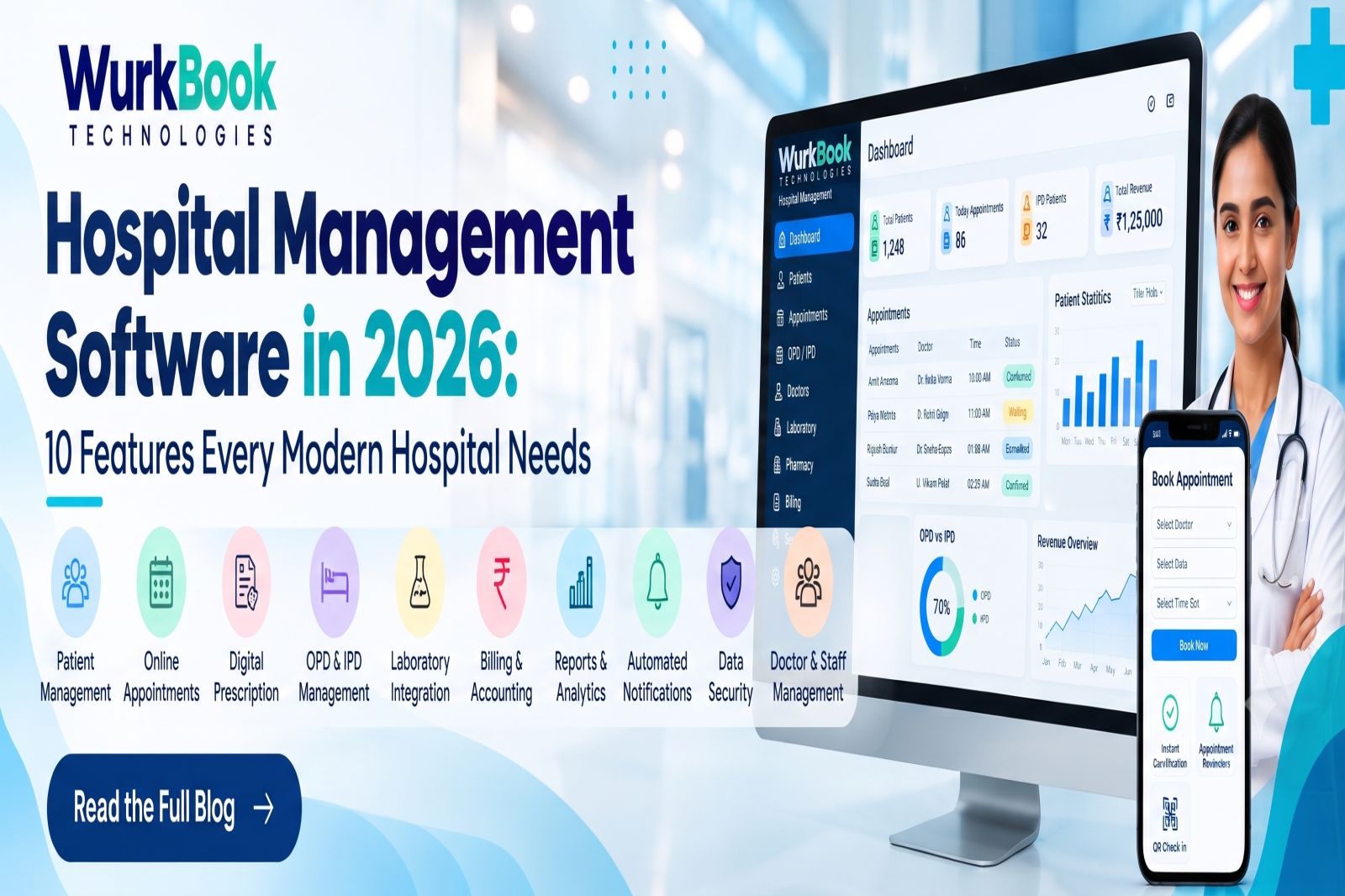
Hospital Management Software in 2026: 10 Features Every Modern Hospital Needs
Introduction
Managing a modern hospital involves much more than treating patients. Hospitals need to manage appointments, patient records, doctors, staff, billing, pharmacy, laboratory reports, prescriptions, and daily operations efficiently.
Traditional registers, spreadsheets, and disconnected software systems can make hospital management time-consuming and increase the possibility of errors.
This is where Hospital Management Software (HMS) can make a significant difference.
A modern HMS provides a centralized digital platform that helps hospitals manage their day-to-day operations, improve coordination between departments, and provide a smoother experience for both patients and healthcare staff.
In 2026, hospitals are increasingly looking for software that is not only capable of storing patient information but also supports automation, digital workflows, real-time reporting, online appointments, billing, and integrated healthcare operations.
In this blog, we will explore 10 important features every modern hospital should consider when choosing Hospital Management Software in 2026.
What Is Hospital Management Software?
Hospital Management Software is a digital system designed to manage and streamline different hospital operations from a centralized platform.
Depending on the hospital's requirements, an HMS can help manage:
-
Patient registration
-
OPD and IPD operations
-
Doctor and staff management
-
Appointments
-
Digital prescriptions
-
Laboratory services
-
Billing and payments
-
Pharmacy operations
-
Reports and analytics
-
Notifications and communication
Instead of managing different processes manually, hospitals can use an integrated Hospital Management System to connect their daily operations digitally.
10 Essential Features of Hospital Management Software in 2026
1. Patient Management System
Patient management is one of the most important components of any Hospital Management Software.
A modern HMS should allow hospital staff to quickly register patients and maintain their information digitally.
Important capabilities can include:
-
Patient registration
-
Patient profiles
-
Medical history
-
Previous visits
-
Appointment history
-
Doctor consultations
-
Billing history
-
Patient search and tracking
A centralized patient record can help staff access relevant information more efficiently and reduce dependence on physical paperwork.
2. Online Appointment Management
Patients increasingly expect convenient ways to book healthcare appointments.
A modern HMS should support online appointment management, allowing patients to select a doctor and available time slot.
Useful features include:
-
Online appointment booking
-
Doctor availability
-
Time-slot management
-
Appointment confirmation
-
Appointment reminders
-
Appointment rescheduling
-
Cancellation management
-
QR-based check-in
Online appointment software can help reduce unnecessary waiting and make appointment management easier for both patients and hospital staff.
3. Digital Prescription
Digital prescriptions can simplify the consultation and prescription workflow.
Instead of relying entirely on handwritten prescriptions, doctors can create and manage prescriptions digitally.
A digital prescription system can include:
-
Patient details
-
Diagnosis
-
Medicines
-
Dosage
-
Frequency
-
Duration
-
Doctor instructions
-
Previous prescription history
Digital prescriptions can also make it easier for authorized staff to access prescription information when needed.
4. OPD and IPD Management
Hospitals need to efficiently manage both Outpatient Department (OPD) and Inpatient Department (IPD) workflows.
An effective Hospital Management System can help manage:
OPD Management
-
Patient registration
-
Doctor appointments
-
Consultation records
-
Digital prescriptions
-
Follow-up appointments
-
Billing
IPD Management
-
Patient admission
-
Bed allocation
-
Ward management
-
Doctor visits
-
Treatment records
-
Discharge management
-
Billing
By managing these processes digitally, hospitals can improve coordination between departments and reduce manual administrative work.
5. Doctor and Staff Management
Hospitals have multiple doctors, nurses, receptionists, technicians, administrators, and other staff members.
Managing their schedules and responsibilities manually can become difficult as the hospital grows.
Hospital Management Software can provide features such as:
-
Doctor profiles
-
Staff profiles
-
Department management
-
Doctor schedules
-
Duty management
-
Attendance
-
Role-based access
-
Staff activity tracking
Role-based access is particularly important because different users may require access to different parts of the system.
6. Laboratory and Pathology Integration
Laboratory services are an important part of hospital operations.
Modern HMS platforms can integrate laboratory workflows with patient and doctor records.
A Pathology or Laboratory Management module can help with:
-
Test registration
-
Investigation management
-
Sample tracking
-
Test processing
-
Report generation
-
Reference ranges
-
Doctor-wise reports
-
Patient report history
With laboratory integration, authorized users can access relevant test results without depending on separate manual processes.
7. Billing and Financial Management
Managing hospital finances accurately is essential.
A modern HMS should provide a centralized billing system for different hospital services.
It may include:
-
OPD billing
-
IPD billing
-
Laboratory billing
-
Pharmacy billing
-
Service charges
-
Discounts
-
Payment tracking
-
Receipts
-
Outstanding payments
-
Financial reports
Automated billing can reduce repetitive data entry and help hospital administrators maintain better visibility into financial transactions.
8. Reporting and Analytics
Data generated by a hospital can provide valuable operational insights.
Modern Hospital Management Software should provide reports that help administrators understand hospital performance.
Examples include:
-
OPD reports
-
IPD reports
-
Patient reports
-
Doctor performance reports
-
Appointment reports
-
Billing reports
-
Collection reports
-
Laboratory reports
-
Department-wise reports
Dashboards and visual reports can help management identify operational patterns and make data-informed decisions.
9. Automated Notifications and Patient Communication
Communication is an important part of the patient experience.
Modern healthcare software can automate routine notifications such as:
-
Appointment confirmations
-
Appointment reminders
-
Follow-up reminders
-
Prescription notifications
-
Payment notifications
-
Report availability notifications
-
Other patient updates
Automation can reduce the amount of repetitive communication handled manually by reception and administrative teams.
For hospitals that use digital communication channels, integrations can further improve the speed and consistency of patient communication.
10. Data Security and Role-Based Access
Healthcare organizations handle sensitive patient and operational information, making data security an important consideration when selecting hospital software.
A modern HMS should provide appropriate security controls such as:
-
User authentication
-
Role-based permissions
-
Controlled access to patient information
-
Secure database management
-
Activity tracking
-
Regular backups
-
Access management
Hospitals should also evaluate their software provider's security practices, backup procedures, hosting environment, and compliance requirements before implementation.
Why Hospitals Need Hospital Management Software in 2026
Hospital operations are becoming increasingly digital.
Managing everything through paper files, registers, spreadsheets, and disconnected systems can make it difficult to maintain accurate information and coordinate different departments.
A centralized Hospital Management System can help hospitals:
Improve Operational Efficiency
Digital workflows can reduce repetitive administrative tasks and make information easier to access.
Reduce Manual Work
Automating appointments, billing, notifications, reports, and other routine processes can save staff time.
Improve Patient Experience
Online appointments, digital prescriptions, faster registration, and automated notifications can create a smoother patient journey.
Improve Data Visibility
Centralized reports and dashboards can give hospital management better visibility into daily operations.
Support Better Coordination
Connecting departments such as reception, OPD, IPD, laboratory, billing, and pharmacy can improve information flow across the hospital.
How to Choose the Right Hospital Management Software
Every hospital has different workflows and requirements. Before selecting an HMS, consider the following:
1. Understand Your Hospital's Requirements
Identify the departments and processes that need digitization.
2. Check Software Scalability
The system should be able to support your hospital as the number of patients, doctors, departments, and transactions increases.
3. Look for Integration Capabilities
Check whether the software can integrate with laboratory, pharmacy, billing, appointment, and other required systems.
4. Evaluate User Experience
Hospital software should be easy for doctors, receptionists, administrators, and other staff members to use.
5. Consider Data Security
Ask about access controls, backups, hosting, authentication, and data protection practices.
6. Check Reporting Features
Make sure the software provides the operational and financial reports your hospital needs.
7. Evaluate Support and Customization
Healthcare workflows can vary significantly. Choose a provider that can provide appropriate support and customization according to your requirements.
Wurkbook Technologies – Hospital Management Software Solutions
At Wurkbook Technologies, we help healthcare organizations move from manual processes to more organized digital workflows.
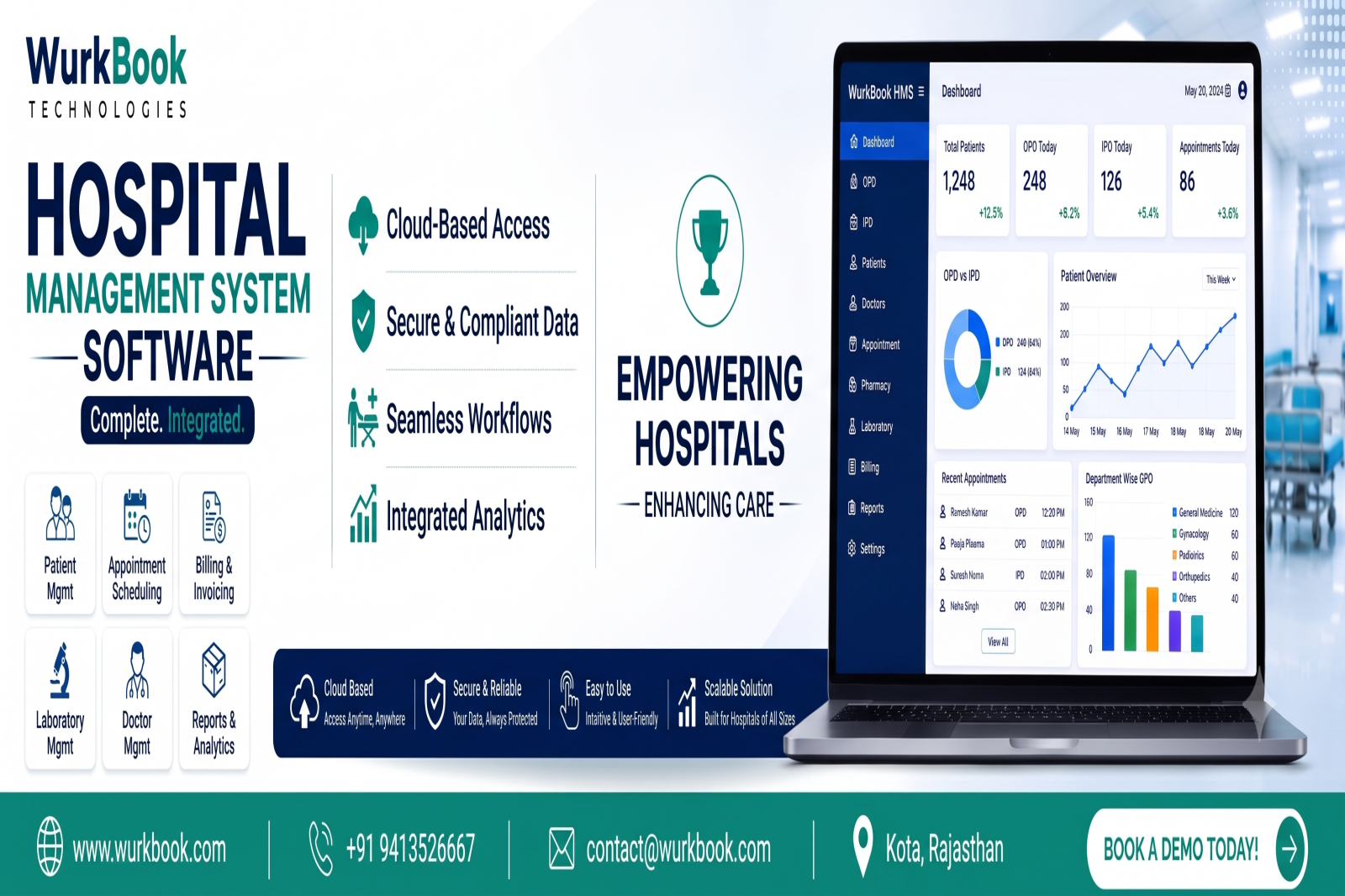
Our Hospital Management Software is designed to help hospitals manage important operations from a centralized platform.
Our healthcare software solutions can include modules such as:
✅ Patient Management
✅ OPD & IPD Management
✅ Online Appointment Management
✅ Digital Prescription
✅ Doctor & Staff Management
✅ Pathology & Laboratory Integration
✅ Billing & Accounting
✅ Reports & Analytics
✅ Notifications & Communication
✅ Customized Healthcare Software Solutions
Whether you are looking for Hospital Management Software, Clinic Management Software, Online Appointment Software, Pathology Software, or customized healthcare software, the right digital solution can help streamline your organization's daily operations.
Why Choose Wurkbook Technologies?
Healthcare organizations have different requirements, which is why a one-size-fits-all approach may not work for every hospital.
Wurkbook Technologies focuses on developing practical digital solutions based on the workflow and requirements of healthcare organizations.
Our services include:
-
Hospital Management Software
-
Clinic Management Software
-
Healthcare Software Development
-
Custom Software Development
-
Website Development
-
Mobile App Development
-
Digital Marketing
-
Branding & Creative Solutions
Our goal is to help healthcare organizations use technology to simplify operations and create better digital experiences.
Conclusion
In 2026, Hospital Management Software is becoming an important part of modern healthcare operations.
A well-designed HMS can bring patient management, appointments, OPD, IPD, prescriptions, laboratory services, billing, reporting, and communication into a more connected digital workflow.
However, choosing software should not be based only on the number of features. Hospitals should also consider usability, scalability, security, integration, customization, support, and long-term requirements.
If your hospital is planning to digitize its operations, Wurkbook Technologies can help you explore healthcare software solutions based on your organization's requirements.
🚀 Ready to digitize your hospital operations?
📞 Call: +91 94135 26667
🌐 Website: www.wurkbook.com
📩 Book a FREE Demo with Wurkbook Technologies today.
POST COMMENT
For post a new comment. You need to login first. Login
COMMENTS(0)
No Comment yet. Be the first