
Wurkbook Technologies
on 1 month ago
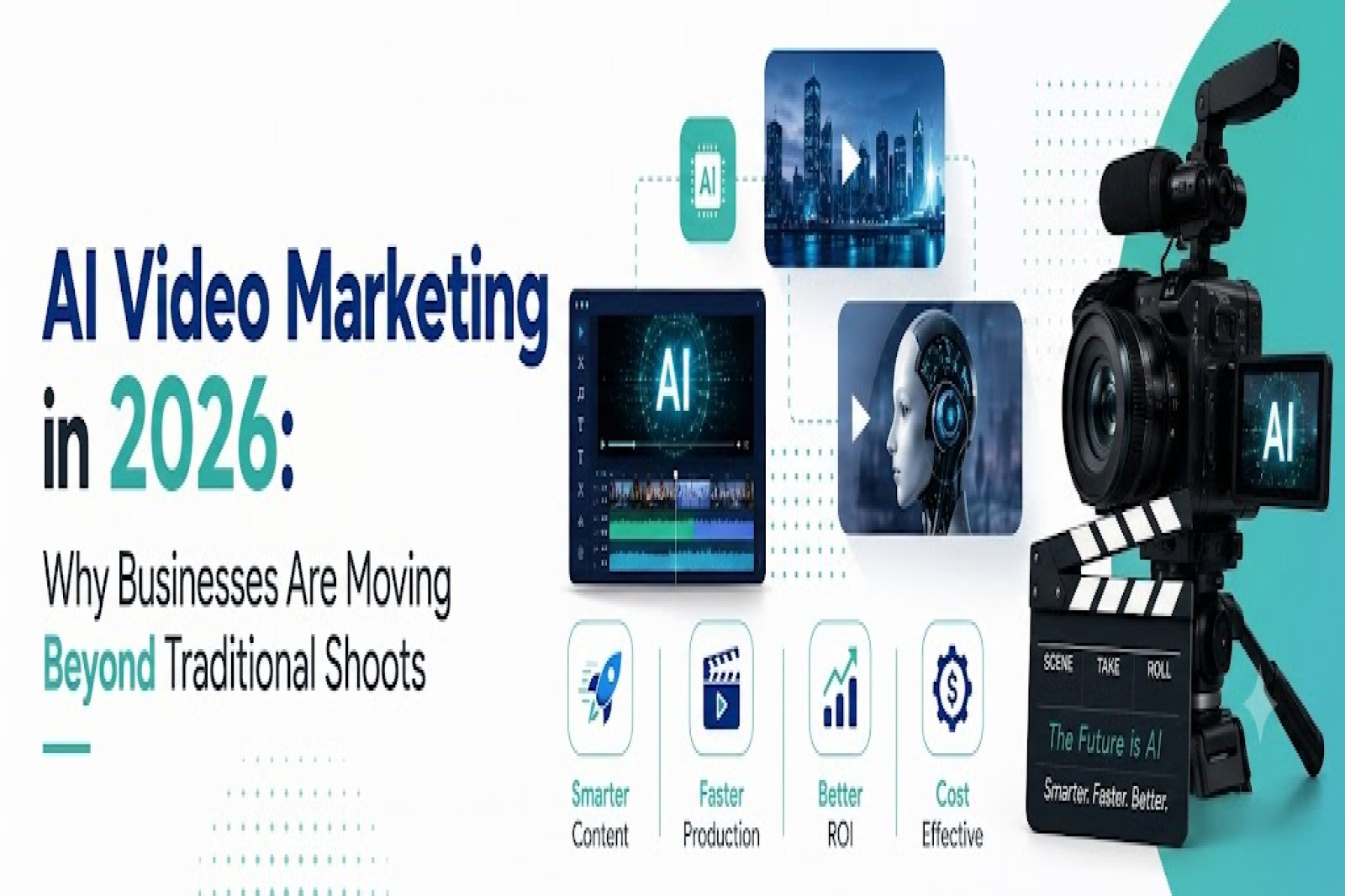
AI Video Marketing in 2026: Why Businesses Are Moving Beyond Traditional Shoots
Video has been the top-performing content format in marketing for years — but how that video gets made is going through its biggest shift yet. In 2026, more businesses are replacing full-scale production shoots with AI-generated and AI-assisted video, and the reasons go far beyond cost-cutting.
Here's why the shift is happening, what it actually looks like in practice, and how to think about it if you're planning your content strategy this year.
The Old Model Wasn't Built for How Fast Marketing Moves Now
Traditional video production follows a familiar, slow path: concept, script, storyboard, casting, location scouting, shoot day, and weeks of post-production. That process made sense when a brand needed a handful of polished videos a year.
It doesn't hold up in a world where:
- Social platforms reward daily or weekly posting cadence
- Campaigns need to be localized into 5–10 languages simultaneously
- A/B testing multiple video variants is now standard practice
- Product updates can make a video outdated within a month
A single traditional shoot can cost anywhere from a few thousand to tens of thousands of dollars, plus days or weeks of turnaround. Multiply that by every variant, language, and platform format a modern campaign needs, and the math stops working for most marketing budgets.
What's Actually Changed in the AI Video Toolset
AI video tools have moved well past the shaky, uncanny-valley clips that defined the category a couple of years ago. The current generation of tools supports:
Text-to-video generation — Producing usable short-form clips from a written prompt, useful for social ads, product teasers, and explainer content.
AI avatars and digital presenters — Realistic spokespeople that can deliver scripted content in multiple languages and tones without booking a talent or studio.
Automated localization — Dubbing and lip-syncing existing footage into new languages while preserving the original speaker's voice and mouth movements.
Script-to-scene tools — Turning a written brief directly into a storyboard and rough cut, cutting pre-production time from weeks to hours.
AI-assisted editing — Auto-generating cuts, captions, background music, and pacing adjustments from raw footage.
None of this fully replaces high-production-value brand films or campaigns where authenticity and craft are the whole point. But it's replacing the volume work — the everyday content that used to eat up production budgets without needing cinematic polish.
Why Businesses Are Making the Switch
Speed to publish. Content that used to take three weeks can go live same-day. That matters when marketing needs to respond to trends, news, or product launches in real time.
Lower cost per asset. Instead of one expensive shoot producing one video, teams can generate dozens of variants for testing at a fraction of the cost.
Easier localization. Global brands can adapt one video into a dozen markets without re-shooting with local talent in each region.
Testing at scale. Marketers can run true A/B and multivariate tests on video creative — something that was rarely affordable with traditional production.
Lower barrier for smaller teams. Startups and small businesses that could never afford a production team can now produce professional-looking video in-house.
The Trade-Offs Worth Knowing
AI video isn't a blanket replacement, and the businesses getting the best results are the ones being deliberate about where they use it.
Authenticity still matters. Audiences are getting better at spotting AI-generated content, and overuse can read as impersonal or low-effort, especially for brands built on trust or craftsmanship.
Quality still varies by tool and use case. Complex human movement, emotional nuance, and certain visual styles are still harder for AI tools to nail convincingly.
Disclosure expectations are rising. Some platforms and regions are introducing rules around labeling AI-generated content, and audiences increasingly expect transparency.
It works best as augmentation, not full replacement. Many teams are landing on a hybrid model: real footage and real people for hero content and brand storytelling, AI tools for high-volume, testable, or localized content.
What This Means for Your Content Strategy in 2026
If you're deciding where AI video fits into your marketing, a practical starting point is splitting your content into two buckets:
- High-stakes brand content — Hero videos, testimonials, founder stories, anything where authenticity is the message itself. Keep this traditionally produced.
- High-volume, testable content — Social ads, product explainers, localized variants, seasonal promos. This is where AI video tools deliver the clearest ROI.
Businesses that treat AI video as a tool for scale rather than a wholesale replacement for production are seeing the strongest results: more content, faster iteration, lower costs — without sacrificing the moments where a human touch actually matters.
The move toward AI video in 2026 isn't about cutting corners — it's about matching production capability to the pace marketing now runs at. Traditional shoots aren't going away, but they're becoming reserved for the content that truly needs them, while AI handles everything that needs to be fast, cheap, and produced at scale.
For most businesses, the winning strategy isn't AI or traditional production. It's knowing which one to reach for, and when.



POST COMMENT
For post a new comment. You need to login first. Login
COMMENTS(0)
No Comment yet. Be the first