
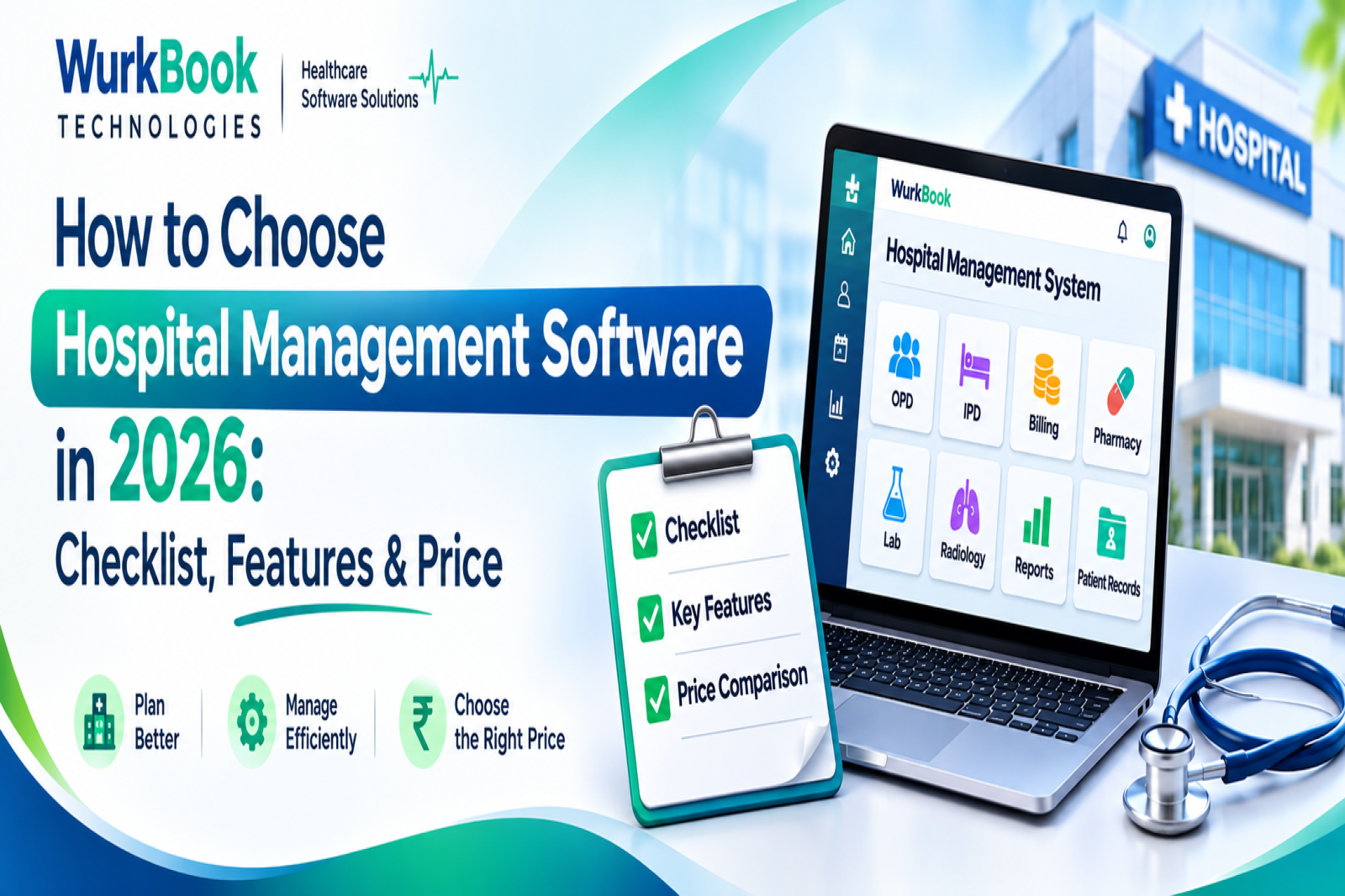
Choosing the right Hospital Management System (HMS) is an important decision for any healthcare organization. The right software can streamline hospital operations, manage patient records, simplify billing, control pharmacy inventory, and generate accurate reports from a single platform.
However, choosing the wrong system can lead to operational delays, scattered patient information, increased costs, and difficulties when upgrading or switching software.
So, how do you choose the best Hospital Management Software in 2026?
In this guide, we will explain the essential HMS features, pricing, compliance requirements, and important factors you should consider before investing in hospital management software.
1. Understand Your Hospital's Requirements
Before contacting any software provider, identify your hospital's actual requirements. Every healthcare facility has different operational needs.
Start by evaluating these three important factors:
Hospital Size and Type
-
Small clinic or individual healthcare practice
-
20–50 bed nursing home
-
100+ bed multi-speciality hospital
Existing Operational Challenges
Identify the problems you want to solve, such as:
-
Slow and complicated billing processes
-
Paper-based patient records
-
Pharmacy stock mismatches
-
Difficulty managing appointments and admissions
-
Time-consuming reports and manual calculations
Budget and Implementation Timeline
Decide how much you are willing to invest and when you want the software to become operational. Also, consider future expansion requirements.
Understanding these requirements will help you select software that matches your hospital's workflow.
2. Check the Essential Features of Hospital Management Software
A reliable Hospital Management System should cover the major departments of your healthcare facility. Instead of purchasing software based only on its price, evaluate the modules and functionalities it offers.
Here are the essential HMS features to look for:
| HMS Module | Why It Matters |
|---|---|
| Patient Registration & OPD | Manages patient registration, appointments, tokens and visit history. |
| IPD & Bed Management | Handles patient admission, discharge and real-time bed availability. |
| EMR / EHR | Maintains digital prescriptions and complete patient medical history. |
| Billing & Insurance / TPA | Simplifies billing, payment tracking and cashless claim management. |
| Pharmacy & Inventory | Manages medicine stock, expiry alerts and inventory control. |
| Laboratory & Radiology | Connects diagnostic reports directly with patient records. |
| Doctor Scheduling | Manages appointments, doctor availability and duty rosters. |
| Reports & Analytics | Provides revenue reports, OPD statistics and department-wise performance. |
| Multi-User Access | Provides role-based access for doctors, receptionists, accountants and other staff. |
Pro Tip: Choose an HMS that allows different departments to work together instead of managing separate software for billing, pharmacy, laboratory and patient records.
3. Check ABDM Integration and Data Compliance
Healthcare digitalization is becoming increasingly important in India. Therefore, ABDM readiness and patient data security should be among your top considerations.
Before purchasing hospital management software, check whether it supports:
Ayushman Bharat Digital Mission (ABDM)
-
ABHA ID creation and linking
-
Digital health record management
-
Health Information Exchange integration
-
Secure sharing of patient health records through supported ABDM workflows
Digital Personal Data Protection (DPDP) Act, 2023
Patient information is sensitive and must be handled responsibly. Evaluate whether the software provides:
-
Secure patient data storage
-
Role-based access permissions
-
Appropriate consent management
-
Data access logs and audit trails
-
Backup and data protection mechanisms
Ask your software provider:
"Is your HMS ABDM-ready, and how do you manage security updates and regulatory changes?"
Remember that simply claiming to be ABDM-ready does not establish compliance. Ask for details about supported integrations and implementation.
4. Cloud-Based vs On-Premise Hospital Management Software
One of the most important decisions is choosing between cloud-based and on-premise deployment.
Both options have advantages depending on your hospital's infrastructure, budget and technical requirements.
Cloud-Based HMS (SaaS)
Cloud-based hospital management software is hosted on remote servers and accessed through the internet.
Advantages:
-
Lower initial investment
-
Access from different locations
-
Regular software updates
-
Reduced server maintenance
-
Easier scalability
It can be a suitable option for small and mid-sized hospitals looking for flexibility and lower infrastructure costs.
On-Premise HMS
On-premise software is installed on your hospital's own servers and infrastructure.
Advantages:
-
Greater control over server infrastructure
-
More control over data hosting
-
Custom infrastructure configuration
-
Can support specific internal network requirements
However, it generally requires higher upfront investment, hardware maintenance and dedicated IT resources.
Which One Should You Choose?
If you want lower infrastructure costs and easier maintenance, cloud-based HMS may be suitable. If your hospital requires greater control over its IT infrastructure, on-premise deployment may be worth considering.
5. Hospital Management Software Price in India (2026)
The cost of Hospital Management Software in India depends on several factors, including hospital size, number of users, available modules, customization and deployment model.
Here are indicative price ranges to help you plan your budget:
| Software Type | Estimated Price |
|---|---|
| Small Clinic Software (SaaS) | ₹15,000–₹60,000 per year |
| Custom Clinic Management Software | ₹50,000–₹5 lakh |
| HMS for Hospitals with 20+ Beds | ₹2 lakh–₹50 lakh+ |
| 50-Bed Hospital (SaaS, First Year) | ₹5 lakh–₹8 lakh |
| 50-Bed Hospital (On-Premise) | ₹20 lakh–₹35 lakh |
| ABDM / ABHA Integration Add-on | ₹50,000–₹5 lakh |
Note: These are indicative estimates, not fixed market quotations. Actual prices vary depending on software functionality, vendor, customization, implementation and support.
Watch Out for Hidden HMS Costs
The initial software quotation may not include all implementation and maintenance expenses.
Before signing an agreement, ask about:
-
Software installation and setup charges
-
Existing patient data migration costs
-
Staff training expenses
-
Annual Maintenance Contract (AMC) charges
-
Additional user or branch charges
-
Customization costs
-
Third-party integrations such as laboratory equipment, payment gateways, SMS and WhatsApp
Always request a detailed written quotation to understand the total cost of ownership.
6. The 10-Point Hospital Management Software Buyer's Checklist
Before finalizing any HMS provider, use this checklist to evaluate the software.
-
Is the software designed for your hospital's size and speciality?
-
Does it support ABDM and ABHA integration?
-
Does the vendor provide a live demo or free trial?
-
Can your existing patient records be migrated?
-
Is the interface easy for doctors and hospital staff to use?
-
Does it provide role-based access and audit trails?
-
Are regular backups and data security measures available?
-
What support channels are available, and what is the response time?
-
Can you add new modules, users and branches as your hospital grows?
-
Is the complete pricing structure documented without hidden charges?
A good HMS provider should be able to demonstrate these capabilities before you make a purchasing decision.
7. Common Mistakes to Avoid When Choosing an HMS Vendor
Even after evaluating different software solutions, hospitals sometimes make mistakes that create problems later.
Avoid these common mistakes:
Choosing Only Based on Price
The cheapest software may not provide all the features your hospital requires. Consider functionality, reliability and long-term support.
Purchasing Without a Live Demo
Always request a practical demonstration. Check how patient registration, billing, appointments and other daily operations work.
Ignoring Staff and Doctor Feedback
Doctors, receptionists, accountants and pharmacy staff will use the system regularly. Their feedback is important when selecting software.
Overlooking Technical Support
Software implementation is not the end of the process. You need reliable support, troubleshooting and regular updates.
Not Considering Future Expansion
Your hospital may add new departments, beds or branches in the future. Choose a scalable solution that can grow with your organization.
Build Your Hospital Management System with Wurkbook Technologies
Choosing the right Hospital Management System can improve operational efficiency, reduce manual work and help healthcare professionals focus more on patient care.
Wurkbook Technologies brings 14+ years of experience in developing industry-specific software solutions for hospitals and clinics.
Our Hospital Management System helps healthcare organizations manage essential operations through an integrated platform, including:
-
Patient Registration and Management
-
OPD and IPD Management
-
Digital Prescription and EHR
-
Doctor and Staff Management
-
Billing and Payment Management
-
Pharmacy and Inventory Integration
-
Laboratory Integration
-
Reporting and Analytics
We also provide customization options to align the software with your hospital's specific workflow and operational requirements.
Looking for reliable Hospital Management Software for your hospital?
Contact Wurkbook Technologies to discuss your requirements and schedule a free software demo.
Email: contact@wurkbook.com
Phone: +91 94135 26667
Website: https://www.wurkbook.com/
Frequently Asked Questions (FAQs)
Q1. Which Hospital Management Software is best for a small hospital?
A cloud-based HMS with simple navigation, transparent pricing and essential modules such as OPD, patient registration, billing and pharmacy management can be a good choice for a small hospital.
Q2. Is ABDM integration mandatory for hospital management software?
ABDM integration requirements depend on the healthcare facility's applicable obligations and participation in relevant digital health programmes. However, choosing ABDM-ready software can help hospitals prepare for India's growing digital healthcare ecosystem.
Q3. How long does HMS implementation take?
Implementation time depends on hospital size, data migration, customization and staff training. A small facility may take a few days to a few weeks, while a large multi-speciality hospital may require several months.
Q4. What is the average cost of Hospital Management Software in India?
The cost can range from approximately ₹15,000 per year for small clinic solutions to several lakhs or more for comprehensive hospital management systems. The final price depends on modules, users, deployment and customization.
Q5. Can Hospital Management Software be customized?
Yes. Many HMS solutions offer customization according to hospital workflows, departments, billing structures, reporting requirements and integrations.
Q6. What is the difference between HMS and EMR?
A Hospital Management System manages overall hospital operations, including patient registration, OPD, IPD, billing, pharmacy and reporting. Electronic Medical Records (EMR) focus specifically on maintaining patients' digital medical histories and clinical records.



Comments (0)